Control water at the roof edge
A gutter problem usually shows itself as overflow, a sagging run, a leaking corner, water behind the trough, or a downspout that discharges beside the building. Repair begins by finding whether capacity, pitch, attachment, outlet flow, or roof-edge detailing caused the failure. The full connected drainage run matters more than the wettest visible corner.
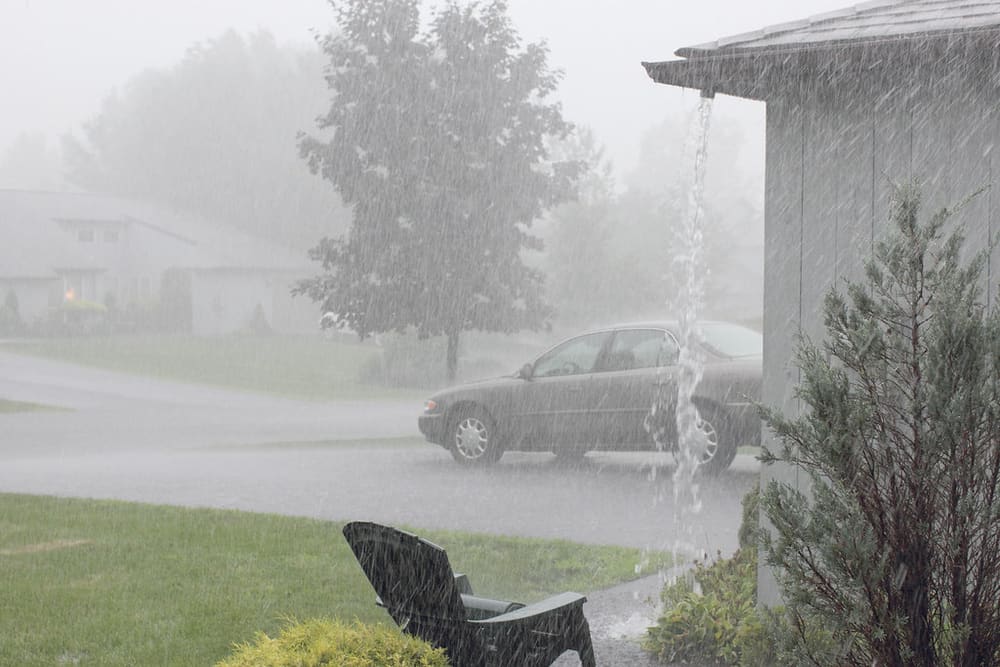
Find Why The Water Leaves The Trough
Overflow at one point can come from debris, a crushed outlet, insufficient downspout flow, a low spot in the run, or too much roof area feeding that section. Water behind the gutter may point toward loose hangers, damaged fascia, poor height below the drip edge, or a roof-edge detail that sends runoff past the trough. Corners and end caps can leak while the rest of the system remains sound. The inspection should watch the path and check attachment before choosing a repair.
Leaves and winter ice add weight, but cleaning alone cannot correct a twisted run or weak fascia. Sealant cannot restore pitch. Extra hangers will not solve an outlet that is too restricted for the connected roof planes. A focused repair might reseal a joint, replace a damaged outlet, reset a short run, add secure attachment into sound backing, or redirect a downspout. The scope should name the cause so the same overflow does not return at the next hard rain or freeze-thaw cycle.
Compare Repair With Seamless Replacement
Sectional gutters with leaks at many joints, long runs that have lost their shape, widespread attachment failure, and inadequate drainage capacity can make whole-system work more practical. Seamless aluminum reduces intermediate joints, though corners, outlets, and end conditions still require careful fabrication and sealing. Replacement is also an opportunity to correct downspout locations and repair accessible fascia problems instead of reproducing the old layout. The contractor should explain which existing components can remain and why.
Whole-home seamless aluminum gutter work in Illinois typically ranges from $1,400 to $3,700. Smaller repairs commonly fall between $150 and $650. Height, access, total length, corners, outlets, fascia condition, removal, guards, and downspout routing change the firm price. These are planning figures rather than operator rates. The inspection confirms dimensions and should identify any roof-edge or siding work that must be coordinated before the gutters are attached.
Coordinate Eaves, Downspouts, And Seasonal Loads
Drip edge, apron details, trough height, end conditions, outlet placement, elbows, extensions, and discharge location work as one drainage path. At northern Illinois eaves, snow and freeze-thaw can add ice weight and expose gaps behind the gutter. Farther south, heavier annual precipitation increases the importance of capacity and a clear outlet. The contractor should inspect the visible roof edge and fascia so new gutters do not conceal decay or repeat a water path into soffit material. Water testing can be useful when conditions allow, but the observation should include where runoff enters, how it moves through the run, and where it leaves the downspout. Testing one corner may miss a high spot or restricted outlet farther along the system. The repair plan should follow the connected run before changing parts.
Guards may reduce debris entry where mature tree cover fills valleys and troughs, but they still require maintenance and cannot repair bad pitch or limited capacity. Downspouts also need somewhere appropriate to send the water. The gutter scope should describe outlet count, extension routing, and how discharge stays away from the building. When storm damage also affects shingles, fascia, or siding, coordinated photographs and one exterior sequence can prevent completed gutter work from being removed for the next repair.