Madison and St. Clair County region
Metro East roof repair often follows Mississippi-side storm corridors across ranch homes, older small-city properties, and small commercial roofs. Wind lift at a broad edge or low-slope seam can expose the assembly quickly, so the first job is to identify active water and open material. Residential and low-slope surfaces need separate repair methods in the same storm path.
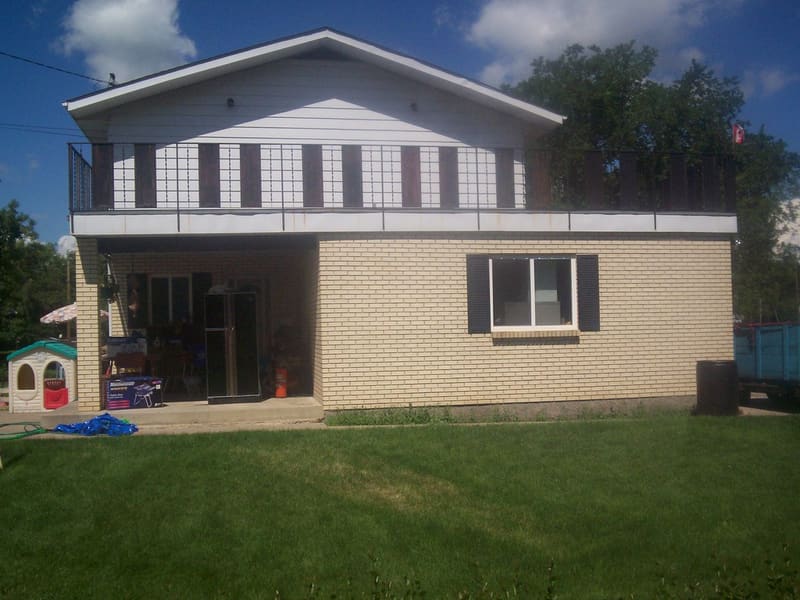
Track Wind Lift Across Roof And Wall Elevations
Hail and wind may damage one side of a Metro East property more heavily than another. Roof photos should identify each slope and show creased shingles, missing caps, bruised areas, exposed underlayment, and dented soft metal. Wall-elevation images can record gutter, fascia, and siding effects along the same track. Older wear should be labeled separately. This organized record supports the repair decision and keeps a storm assumption from replacing inspection evidence.
When a roof field or panel edge is open, temporary dry-in can protect the interior until permanent work is safe and materials are available. Keep people away from bulging ceilings and wet electrical areas, move belongings, and call rather than climbing. The follow-up scope should separate the stabilization charge, damaged sheathing, finished tie-in, and material match. Emergency work controls exposure; it should not conceal the condition that determines repair or replacement. On a small commercial property, note which interior area or equipment sits beneath the opening and how access is controlled. The contractor can then plan protection and inspection without assuming a residential attic path exists.
Use The Repair Method That Fits Each Surface
A ranch shingle roof, porch membrane, garage addition, and small commercial low-slope surface move water differently. Steep asphalt depends on shingle courses and flashing. Low slopes rely more heavily on seams, drains, wall terminations, and penetrations. Metal panels bring fasteners, laps, closures, and thermal movement. A Metro East contractor should name the roof type and proposed detail in the quote instead of applying one repair description across every surface.
Ask for the contractor IDFPR roofing license number and verify the 104.xxxxxx record with the state. The contractor also checks local permit requirements in the Madison or St. Clair County community where the property sits. For insurance-funded storm work, Public Act 96-1113 prohibits deductible payment or offsets, and the carrier controls coverage. A complete scope identifies the affected building surface, materials, access, deck assumptions, cleanup, and the line between temporary and permanent work. Low-slope repairs should name the membrane or metal system, seam or flashing method, and drainage point involved. Those details let a property owner compare actual methods instead of two quotes that use the same broad label for different work.