Document the changed condition
Hail, derechos, straight-line wind, and tornado-season weather can damage a narrow path across an Illinois property. A storm inspection should identify the affected slopes and exterior surfaces, separate sudden damage from older wear, and produce a scope that stands on physical evidence. Roof history helps, but current photographs and material condition carry the recommendation.
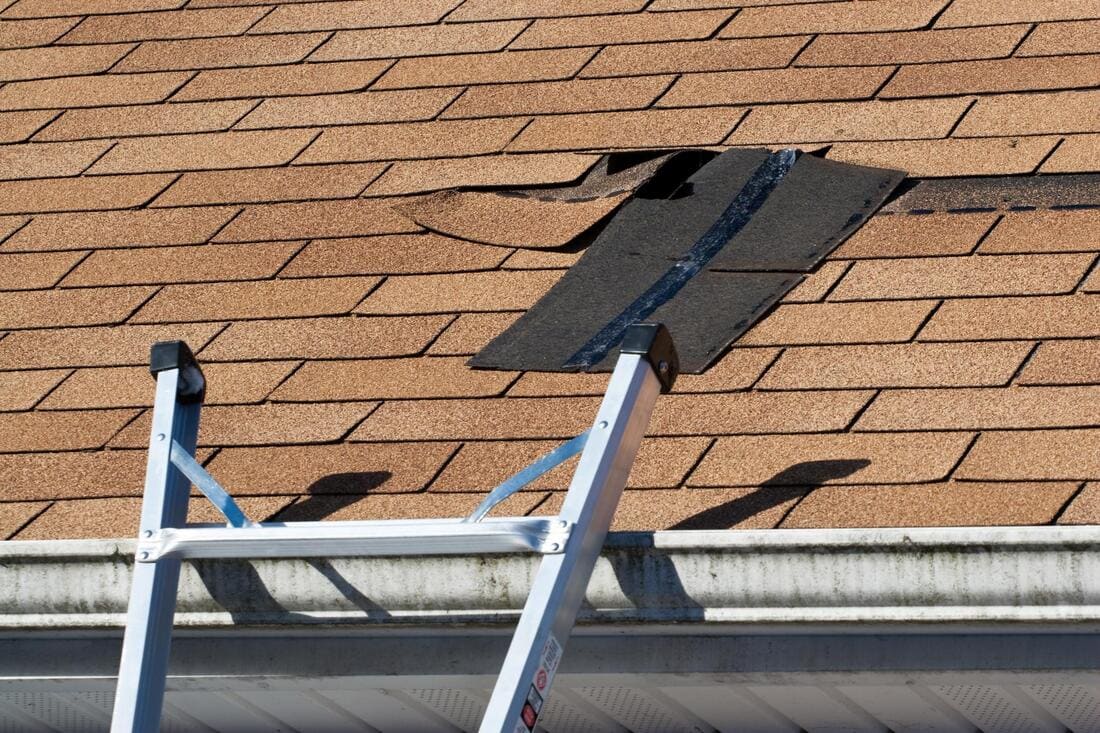
Inspect More Than The Missing Shingle
A bare patch on one slope is only the obvious part of a wind event. Nearby tabs may be creased at the seal line, ridge pieces may have shifted, and nails can loosen without leaving a clean opening. Hail may disturb granules and bruise the asphalt mat while also marking vents, gutters, fascia, or siding on the same exposure. Tree impact can scuff shingles, bend metal, and crack a vent cap beyond the visible strike. Each clue belongs on a slope-by-slope photo record.
Inside the building, fresh water marks, damp attic materials, and debris below a roof opening help tie the exterior condition to the storm. Outdoors, the inspection should include roof edges, penetrations, flashing, drainage, and wall surfaces that faced the weather. Ordinary aging still matters: blistering, old granule loss, and previous repairs should be identified separately. That distinction gives the homeowner and insurer a clearer record than a conclusion based on the storm date alone.
Keep Roof Evidence Separate From Claim Promises
The roofing contractor can explain material damage, provide measurements and photographs, price a repair or replacement scope, and meet an adjuster when an on-site discussion is useful. The carrier interprets the policy and decides coverage. Ask the contractor to label observations by slope or elevation and to identify repair assumptions in ordinary construction language. A detailed inspection may support a conversation with the insurer, but it cannot bind the insurer or guarantee payment.
Illinois Public Act 96-1113 prohibits a roofing contractor from paying, waiving, rebating, crediting, or absorbing a homeowner insurance deductible when insurance proceeds fund the project. The prohibition must also appear in the written contract. A promised rebate, advertising credit, inflated invoice, or side agreement that erases the deductible is a consumer warning. Compare scopes on the work being proposed, keep the deductible visible, and allow the insurer to make its own claim decision. Illinois tornado activity is concentrated in spring and early summer, while hail exposure varies considerably across the state. Seasonal risk justifies timely documentation after suspicious weather, but it does not prove that a particular roof was damaged. The photographs, material condition, and water path must support the recommendation for that property.
Choose Stabilization, Repair, Or Replacement
An open deck, puncture, or missing material may need temporary protection before the permanent scope is known. A tarp, board-up, or dry-in controls water; it does not settle whether the finished job is a patch, section repair, or replacement. When damage is confined and nearby roofing remains workable, repair may be the sensible route. Broader wind lift, repeated hail bruising, brittle materials, or damaged sheathing across several areas can make replacement more defensible.
The written recommendation should state which roof planes are involved, what must be removed, how decking discoveries will be handled, and which conditions could change the price. Permit requirements differ across Illinois municipalities, so the serving contractor verifies what applies to the property. Before signing, request the contractor license number in the 104.xxxxxx format and check it with the IDFPR lookup. The decision should be traceable from photos to scope to contract, without a sales shortcut filling the gaps.