Broad Chicago suburban region
Roof repair across the broad Chicago suburban region covers postwar through 2000s subdivisions with asphalt shingles, attached garages, two-story access, valleys, chimneys, and additions. Winter edge leaks and storm lift deserve inspection that follows the individual house rather than a single regional assumption. Complex access and roof intersections should be visible in the written scope.
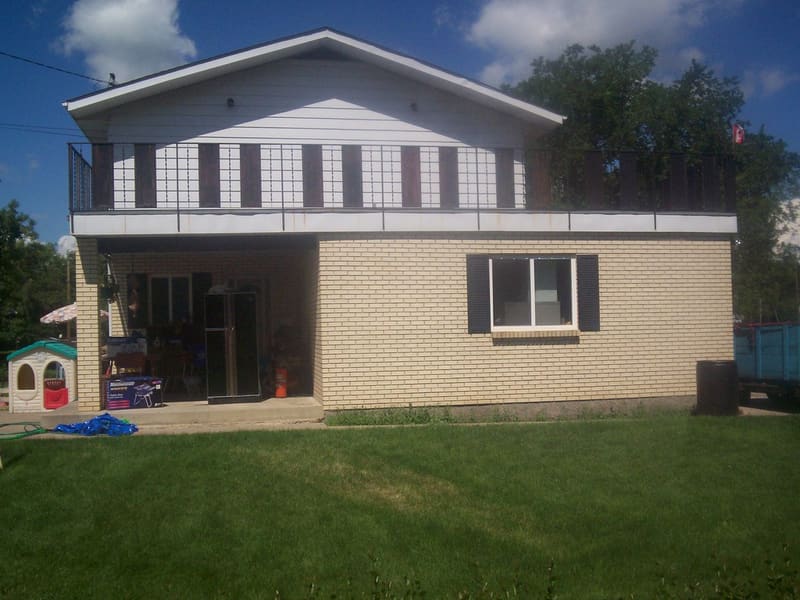
Check Complex Suburban Roof Intersections
Attached garages, intersecting gables, dormers, chimneys, and roof-to-wall joints create concentrated water paths. A stain can begin above a long valley or at step flashing and appear in a room several feet away. In winter, snowmelt can expose weak eave details; during storm season, lifted tabs and ridge pieces may affect only the weather-facing planes. The contractor should inspect those intersections, nearby material condition, drainage, and accessible attic clues before deciding how wide the repair must be.
Access and disposal can place suburban Chicago pricing above downstate markets, but the quote still has to reflect the property. Height, pitch, layers, brittle shingles, sheathing, masonry, and site access are legitimate scope variables. A localized boot or flashing repair typically falls in the $250 to $650 tier, while moderate tracing or valley work commonly runs $550 to $1,400. A free inspection confirms which tier fits and explains hidden-condition pricing in writing. The scope should also address property protection where closely spaced drives, patios, landscaping, or attached structures affect tear-off and cleanup. These practical access notes are more useful than a regional surcharge without explanation.
Compare A Durable Tie-In With Roof-Wide Work
A focused repair is sensible when the defect has clear boundaries and surrounding shingles remain flexible enough for a sound tie-in. Repeated leaks on separate planes, broad granule loss, soft decking, and brittle material change that judgment. The contractor should show representative photos and explain why repair remains credible or why opening the area would disturb too much of the old field. Replacement should follow system evidence, rather than the mere fact that another roof nearby was replaced.
Verify the serving contractor IDFPR number in the 104.xxxxxx format and make sure the licensee name appears on the bid and contract. The contractor confirms municipal permit requirements for the property. When insurance funds storm work, Public Act 96-1113 bars deductible payment, waiver, rebate, credit, or absorption. Carrier coverage remains outside contractor control. A complete regional scope identifies materials, affected planes, access, sheathing assumptions, cleanup, and contract terms. On a steep or complex two-story roof, the quote should also explain staging and how tear-off debris is controlled around the attached garage, drive, and lower roof sections. Safe access is a scope factor that should be visible, rather than buried in an unexplained total.